Welcome to our websites!

2026 Top Profile Bending Machine Manufacturers?

Choosing a reliable Profile Bending Machine manufacturer in 2026 requires more than comparing catalog prices. Steel service centers, fabrication workshops, and infrastructure contractors need equipment that performs under real production pressure. A machine may appear impressive in a brochure, yet struggle with springback, uneven feeding, or repeated profile changes.

This guide examines leading manufacturers through practical criteria, including machine rigidity, bending accuracy, hydraulic control, CNC integration, and after-sales support. It also considers working capacity, roll design, pre-bending performance, energy use, and operator safety. These details matter when processing structural steel, aluminum sections, stainless steel, or complex architectural profiles. A smooth demonstration is useful. Long-term service records are better.

The evaluation draws on technical specifications, application examples, customer feedback, and industry experience. However, no ranking is completely final. Regional support, spare-part availability, and operator skill can change the best choice for each buyer. A premium machine is not automatically the right machine. Sometimes, a simpler model offers better value for moderate production volumes.

Expect careful comparisons rather than exaggerated promises. The selected manufacturers will be reviewed for engineering depth, manufacturing consistency, customization capability, and measurable performance. Buyers should still request sample bending tests, inspect finished profiles, and confirm warranty terms before purchasing. Small details matter. This article aims to provide a practical starting point for identifying the top Profile Bending Machine manufacturers in 2026, while recognizing that real workshop conditions may reveal limitations that technical brochures overlook.
2026 Top Profile Bending Machine Manufacturers?

What Is a Profile Bending Machine?

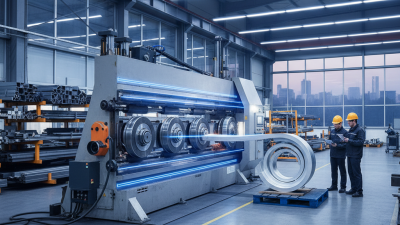
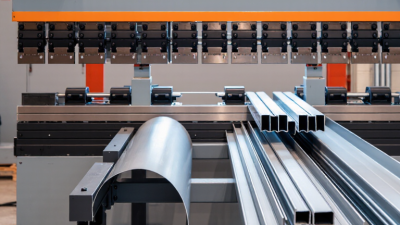
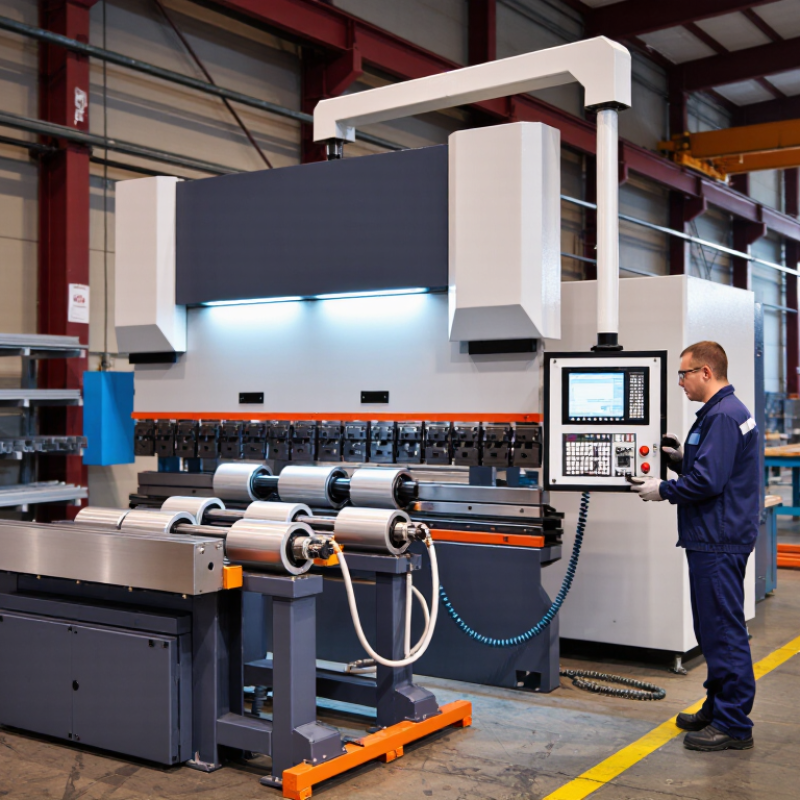
A profile bending machine is industrial equipment that curves long metal sections into controlled radii. It works by pressing or rolling a profile between forming rollers. Common profiles include angle iron, channel, flat bar, pipe, tube, and structural sections. The machine gradually changes the material shape instead of forcing one sharp bend. This reduces sudden distortion and helps preserve the profile’s load-bearing geometry.

In a typical workshop, an operator feeds a steel section through three rollers. The side rollers guide it, while the adjustable center roller applies forming pressure. Hydraulic systems handle heavy sections, while mechanical systems suit lighter, repeatable work. The exact result depends on material grade, wall thickness, roller diameter, and feed speed.

Good equipment combines rigid frames, accurate adjustment, and clear control feedback.

A digital position display can improve repeatability, but it does not replace skilled measurement. Operators often make a trial bend, measure the radius with a template, then correct the roller setting.

Springback remains a practical issue. Steel may relax after forming, so the finished radius can open slightly. Aluminum and stainless steel behave differently. Experience matters here.

A reliable manufacturer should provide load data, tooling guidance, service documentation, and realistic capacity charts. Buyers should check whether rated capacity refers to mild steel, a specific profile, or ideal conditions. Vague figures deserve questions.

Before production, inspect rollers, guards, emergency stops, and hydraulic connections.

Keep hands away from moving pinch points. Small errors can become costly scrap. I have found that speed claims are less useful than stable accuracy across repeated bends.

The best machine is not always the largest one. It should match the workshop’s materials, radius range, floor space, and operator skill. Some selection decisions still require testing, because catalog data cannot reveal every real-world variation.

How Profile Bending Machines Work

Profile bending machines curve metal sections through controlled force and repeated rolling. The operator places the profile between rotating rolls. Many machines use three rolls. Two rolls support the material, while an adjustable roll applies pressure. It looks simple. Yet alignment matters greatly.

As the profile advances, the rolls distribute pressure along its length. The machine does not create the final radius in one pass. Small adjustments gradually shape the section. For angle iron, channel, tube, or flat bar, the tooling must match the profile shape. Poor tooling can twist the workpiece or leave visible marks. In practical shop work, I have found that clean surfaces and accurate setup prevent many defects. Measure often.

The inner surface compresses while the outer surface stretches. Between them, the neutral axis changes little in length. After release, springback may open the radius slightly. Material grade, thickness, temperature, and rolling direction all affect this movement. Operators compensate through test bends and measured corrections. A trial bend can still miss the target. My own measurements have occasionally looked correct, while the finished frame showed a small twist. That mistake usually points to uneven feeding, worn tooling, or incorrect pressure. Patience helps, but records and gauges make adjustments more reliable.

2026 Top Profile Bending Machine Manufacturers? - How Profile Bending Machines Work

Evaluation Dimension Typical Technical Data How It Works or Why It Matters Practical Selection Guidance
Machine configuration Three-roll pyramid, three-roll initial-pinch, three-roll double-pinch, or four-roll designs The rolls apply bending force at controlled contact points. Additional rolls improve material positioning and reduce the need for manual repositioning. Choose a four-roll or double-pinch configuration when repeatability, reduced flat ends, and production speed are important.
Compatible profile types Angles, channels, flat bars, square tubes, rectangular tubes, round tubes, beams, rails, and custom sections Different cross-sections have different neutral axes and torsional behavior, so roll geometry and support arrangements must match the profile. Confirm the exact profile dimensions, orientation, material grade, and required bending axis before comparing machines.
Material compatibility Common materials include carbon steel, stainless steel, aluminum, copper alloys, and other ductile metals Yield strength, tensile strength, elongation, and work-hardening behavior determine the force required and the amount of springback. Use certified material data rather than nominal material names when calculating capacity and process settings.
Profile size range Defined by the maximum section height, flange or wall width, thickness, and minimum bending radius The profile must fit between the rolls while maintaining sufficient contact area for stable force transmission. Compare published capacity tables for the exact section, not only the machine’s maximum force rating.
Minimum bending radius Specified as an inside or centerline radius and varies with profile geometry, material, thickness, and bending orientation A smaller radius requires greater plastic deformation and generally increases force, springback, and the risk of local buckling or distortion. Request a trial bend for tight-radius work, especially with hollow sections or thin-walled profiles.
Bending force and torque Capacity depends on section modulus, yield strength, roll spacing, friction, and the desired radius The driven rolls generate torque while the adjustable roll position controls the bending moment applied to the workpiece. Select capacity with a safety margin for material variation, repeated production, and startup or correction passes.
Roll diameter and spacing Larger rolls generally support heavier sections; adjustable center distances accommodate different profile sizes Roll diameter affects contact conditions, achievable radius, deflection, and the risk of surface marking. Check roll width, usable roll length, roll material, surface finish, and replaceability.
Hydraulic or electromechanical adjustment Hydraulic cylinders are common for high-force adjustment; electromechanical axes support precise programmable positioning The adjustment system changes roll position incrementally to increase curvature during successive passes. Prioritize closed-loop positioning and synchronized axes for repeat production and multi-radius programs.
Bending sequence Feed, align, pre-bend, roll through, adjust, measure, and finish-bend The workpiece is progressively deformed beyond its elastic range until the required curvature is achieved. A controlled multi-pass process normally provides better accuracy than applying the full correction in one pass.
Springback compensation Requires over-bending or correction passes; the amount depends on material strength, thickness, radius, and profile geometry Elastic strain is released when the load is removed, causing the profile to open slightly from the programmed shape. Use test pieces, measurement feedback, and stored recipes to establish repeatable compensation values.
Flat-end length Present to some degree in three-roll machines; reduced by pre-bending or minimized in pinch-type configurations The material near the entry and exit ends may not receive the same bending moment as the central section. Specify acceptable straight-end length and whether extra stock will be trimmed after bending.
Automation and control Manual, NC, CNC, touchscreen control, programmable recipes, digital position readout, and optional measurement integration Control systems coordinate roll positions, rotation speed, pass count, and correction data. Match automation level to batch size, operator skill, part complexity, and required traceability.
Accuracy and repeatability Affected by frame stiffness, roll deflection, backlash, hydraulic stability, material consistency, and measurement method Structural deflection and process variation can change the final radius even when the nominal settings are unchanged. Ask for test-bend results, tolerance definitions, and the measurement reference used for radius verification.
Safety provisions Emergency stops, guarding, pinch-point protection, hydraulic overload protection, and safety control circuits Rotating rolls and moving adjustment mechanisms create crushing, entanglement, and ejection hazards. Verify compliance with applicable workplace regulations and require documented risk-control measures.
Maintenance requirements Routine lubrication, hydraulic inspection, alignment checks, roll-surface inspection, and calibration Correct lubrication and alignment reduce wear, slippage, uneven bending, and premature component failure. Evaluate spare-parts availability, service response, manuals, training, and preventive-maintenance access.
Reference note: Actual capacity, minimum radius, accuracy, and productivity must be confirmed using the machine’s technical documentation and a representative test piece. Values vary with profile geometry, material grade, thickness, orientation, and forming method.

Key Criteria for Evaluating Manufacturers in 2026

Selecting a top profile bending machine manufacturer in 2026 requires more than comparing online specifications. Start with bending accuracy, repeatability, and material range. Ask for test samples using your actual profiles, including aluminum, stainless steel, and coated sections. Measure radius consistency, surface marks, and setup time. A machine that looks impressive may still waste material during production.

Review the manufacturer’s engineering experience and technical documentation. Check whether the machine supports digital parameter storage, real-time monitoring, and simple tooling changes. Inspect the frame, rollers, drive system, and control cabinet during a factory visit or live demonstration. Safety functions should align with recognized industrial requirements. Clear manuals matter. Confusing instructions can create expensive delays.

Reliable support is equally important. Evaluate spare-parts availability, remote diagnostics, training quality, and technician response times. Request references from operations with similar production volumes. Compare the full ownership cost, not only the purchase price. Energy use, tooling wear, software updates, and maintenance can change the calculation. A detailed warranty is useful, but it should define response times and excluded parts. Some evaluations focus too heavily on automation. That can be a mistake. A less complex machine may perform better when operators need fast adjustments and stable results. Leave room for doubt, and verify every claim with production evidence.

Top Profile Bending Machine Manufacturers to Consider

When choosing profile bending machine manufacturers to consider in 2026, look beyond advertised tonnage. A reliable manufacturer should explain bending capacity, profile dimensions, roller materials, and control accuracy clearly. Ask for test results using your actual steel, aluminum, or stainless-steel sections. A machine that bends a sample smoothly may still struggle with repeated production.

In workshop evaluations, I inspect weld quality, frame rigidity, roller alignment, and hydraulic response. Small details matter. Uneven rollers can leave visible marks along a curved beam. Strong manufacturers provide installation guidance, operator training, spare-part access, and documented maintenance schedules. Their engineers should also discuss springback, minimum bending radius, and safe loading methods. Vague answers deserve caution. A low purchase price can become expensive when downtime reaches several days. I would also request customer references from similar industries, though references are not perfect proof.

Tips: Compare at least three manufacturers. Send identical drawings to each supplier. Check whether quoted capacity matches real production needs. Ask for a factory acceptance test and inspect the control interface personally. Record noise, vibration, and cycle time during testing. Do not ignore after-sales support. It often decides the machine’s long-term value. I may still reconsider a supplier after a good demonstration if its documentation is weak, because attractive performance can hide practical problems.

Applications and Buying Considerations for Profile Bending Machines

Profile bending machines serve many fabrication environments, from architectural handrails to truck frames, greenhouse hoops, and curved conveyor supports.

They shape steel, stainless steel, aluminum, and other profiles through controlled roll pressure. Tube bending requires different tooling from angle or channel bending. The wrong setup can flatten a tube or twist an angle.

Buying decisions should begin with the actual profile, not the advertised maximum size.

Check section height, wall thickness, yield strength, and required bending radius. A machine rated for 100 mm may perform poorly with a thick, high-strength section. It is not only about capacity. Ask whether the rolls support pre-bending, which reduces straight ends on short workpieces. Confirm adjustable guides, digital position feedback, emergency stops, and repeatable settings for production work.

Request a test using your own material and target radius. Test the actual section. Inspect springback after unloading, because calculated settings rarely match every alloy or heat condition.

Hydraulic systems offer strong forming force, while electric systems may provide cleaner control and lower routine energy use. Neither choice is automatically better. Consider operator training, tooling changes, maintenance access, and service response in your region.

A lower purchase price may become expensive when special rolls, calibration, or downtime are added later. Even experienced buyers can overlook floor space and workpiece handling. That mistake deserves a second look.

Send your message to us:

WhatsApp Online Chat !