Why Choose an Oil Country Lathe for Your Manufacturing Needs?
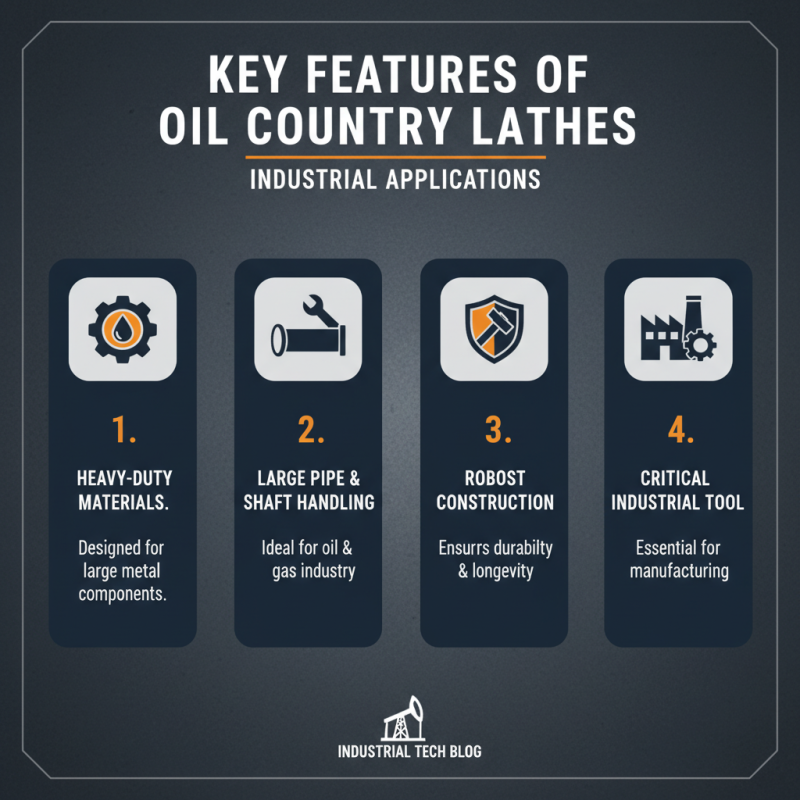
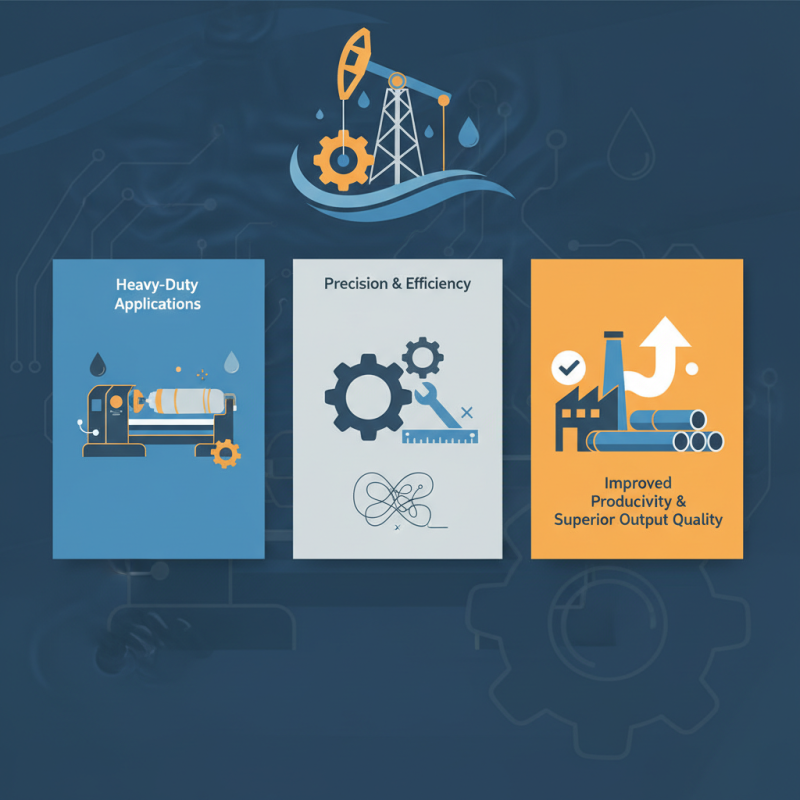
In today's manufacturing landscape, precision and efficiency are paramount. An Oil Country Lathe stands out as a vital tool for industries dealing with oil and gas. These lathes are designed for heavy-duty applications. They handle large, complex components with ease.
Selecting the right machinery is crucial for ensuring operational success. An Oil Country Lathe offers unique features tailored to meet specific needs. Its robust construction allows for high tolerance levels. However, not all lathes are created equal, and some users have reported challenges in setup and maintenance.
Understanding these nuances is important. The versatility in design can sometimes lead to confusion in selection. Despite potential drawbacks, the benefits of using an Oil Country Lathe often outweigh the downsides. Manufacturers must evaluate their requirements carefully. The right choice can lead to improved productivity and superior output quality.
Understanding Oil Country Lathes: Definition and Functionality
Oil country lathes are specialized machines designed for heavy-duty tasks. They play a crucial role in the manufacturing of oil and gas equipment. Their primary function is to work with large tubular components. This includes items like casing, tubing, and drill pipes. These components require precision and strength, and oil country lathes deliver both.
These lathes are built to handle significant length and weight. They often feature long beds and robust spindle designs. This allows for stable operation, even under heavy loads. Operators must be skilled in using these machines. The complexity of the parts being machined demands attention to detail. However, not all operators have the same level of experience. This inconsistency can lead to variations in quality. It highlights the need for thorough training and practice.
Understanding the functionality of oil country lathes is essential. Their unique features, like larger diameter chucks and specific tooling, set them apart. Yet, there’s always room for improvement in machining techniques. Continuous learning and adaptation in this field are vital. The industry evolves, and so should the operators’ skill sets. Balancing efficiency with precision is an ongoing challenge for manufacturers.
Benefits of Using Oil Country Lathes in Manufacturing Processes
Oil Country Lathes have specific design features that cater to large-diameter and heavy workpieces. They excel in processing materials used in the oil and gas industry. Their robust construction ensures they can handle the stresses of demanding tasks. Manufacturers find these lathes useful for turning, threading, and boring operations.
The unique advantages of using Oil Country Lathes are clear. They provide excellent rigidity and stability, which is crucial for achieving high precision. Operators appreciate the ease of setup, allowing for quick adjustments. Additionally, their capabilities extend to machining complex shapes and threads that are often needed in the energy sector. This flexibility saves valuable production time and resources.
However, the initial investment in these lathes can be significant. Not all manufacturers may justify the expense. It's vital to assess the long-term benefits against the costs. Some users may find that standard lathes meet their needs sufficiently. Continuous evaluation of one’s manufacturing requirements is essential in determining the right equipment. Proper training and maintenance are also crucial to maximize efficiency and safety.
Comparison with Traditional Lathes: Why Oil Country Lathes Stand Out
Oil country lathes offer distinct advantages over traditional lathes, especially in the oil and gas industry. These lathes are specifically designed for machining long, heavy workpieces. Their robust structure and powerful motors ensure they handle large diameters and lengths efficiently. Traditional lathes might struggle with such demands, risking precision and safety.
The programming and operation of oil country lathes can also differ significantly. Many models now integrate advanced CNC technology. Operators can achieve higher accuracy and reduce setup times. Traditional lathes often require more manual adjustments, leading to longer production times. However, the initial learning curve for CNC systems may pose a challenge for some workers.
Consider the versatility of oil country lathes. They adapt to various materials, from aluminum to tougher steel. This flexibility is vital in manufacturing operations where material types can change frequently. However, workers might need additional training to exploit this versatility fully. Therefore, while transitioning to an oil country lathe could elevate manufacturing capabilities, it's essential to weigh those initial training requirements.
Oil Country Lathes vs Traditional Lathes: Key Performance Metrics
Selecting the Right Oil Country Lathe for Your Manufacturing Needs
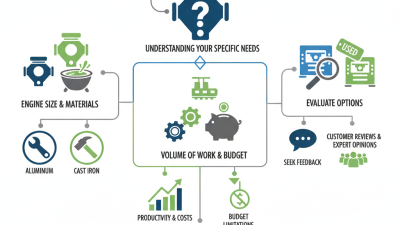
Selecting the right oil country lathe can significantly impact your manufacturing outcomes. These machines are designed to handle the specific requirements of oil and gas industry components. When choosing, consider the lathe's capacity and the materials you intend to work with. A lathe that can accommodate larger diameters may be essential for certain applications.
It’s also vital to assess the precision of the lathe. Precision will affect the overall quality of the components produced. Look for features such as built-in measurement tools and advanced CNC capabilities. However, do not overlook the importance of operator training. Even the best machines can produce subpar results if not operated correctly.
Manufacturers should also evaluate the maintenance requirements. An oil country lathe requires regular upkeep to maintain performance. Spare parts availability is another critical factor. Ensuring that you can source replacement components easily will save time and cost in the long run. Remember, every choice carries potential risks and benefits. Reflecting on these aspects can help you make a more informed decision.
Why Choose an Oil Country Lathe for Your Manufacturing Needs? - Selecting the Right Oil Country Lathe for Your Manufacturing Needs
| Feature |
Description |
Benefits |
| Heavy-Duty Construction |
Built with robust materials to withstand high torque and heavy workpieces. |
Increased durability and longevity, reducing downtime for maintenance. |
| Precision Machining |
Capable of producing tight tolerances for various applications. |
Improved part quality, leading to better product performance. |
| Versatility |
Suitable for various materials including steel, aluminum, and plastics. |
Ability to handle diverse projects without needing multiple machines. |
| Ease of Use |
User-friendly controls and interfaces for operators. |
Reduced training time for staff and increased shop floor efficiency. |
| Energy Efficiency |
Designed to consume less power while maintaining performance. |
Lower operational costs and reduced environmental impact. |