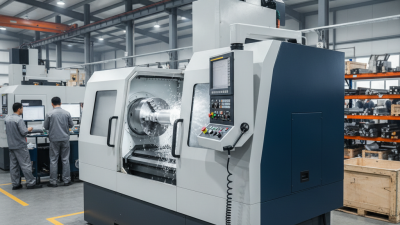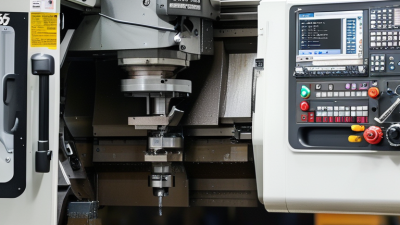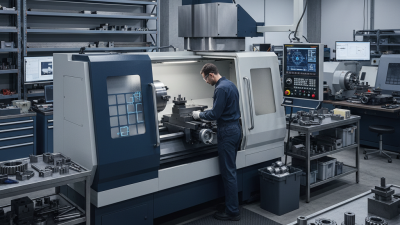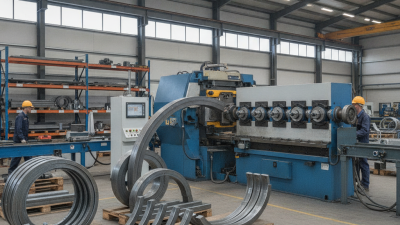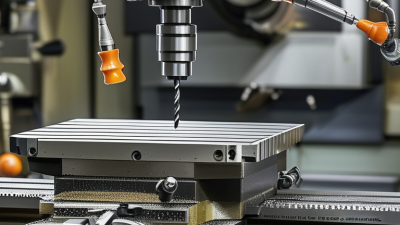
Choosing the right China Best CNC Lathe Machine Manufacturer for Global Buyers requires more than comparing prices. A reliable supplier should demonstrate engineering experience, stable production, and clear quality controls. Buyers need evidence, not attractive promises.
A capable Cnc Lathe Machine manufacturer should explain spindle accuracy, repeatability, cutting capacity, control systems, and service support. Ask for inspection records, sample parts, factory videos, and references from comparable industries. A machine may look impressive on a showroom floor. Its real value appears after months of production.
Taiichi Ohno, a leading manufacturing expert, said, “Without standards, there can be no improvement.” This principle remains highly relevant to CNC sourcing. Standardized assembly, documented testing, and consistent calibration help reduce uncertainty for international customers. They also reveal whether a manufacturer truly controls its process.
Look closely at practical details. Does the supplier test positioning accuracy before shipment? Are electrical components compatible with your region? Can engineers respond quickly when a servo alarm appears at midnight? These questions matter more than polished brochures.
China offers strong manufacturing capacity, competitive costs, and broad customization options. Yet quality varies between suppliers. That is the uncomfortable part. A low quotation may hide weaker components, limited training, or expensive after-sales delays.
The strongest manufacturers welcome technical questions. They provide realistic tolerances and admit limitations. Global buyers should compare machining trials, warranty terms, delivery schedules, and spare-parts availability. This approach supports a safer decision and a more dependable production partnership. Not every supplier will be perfect. Careful verification still makes a difference.
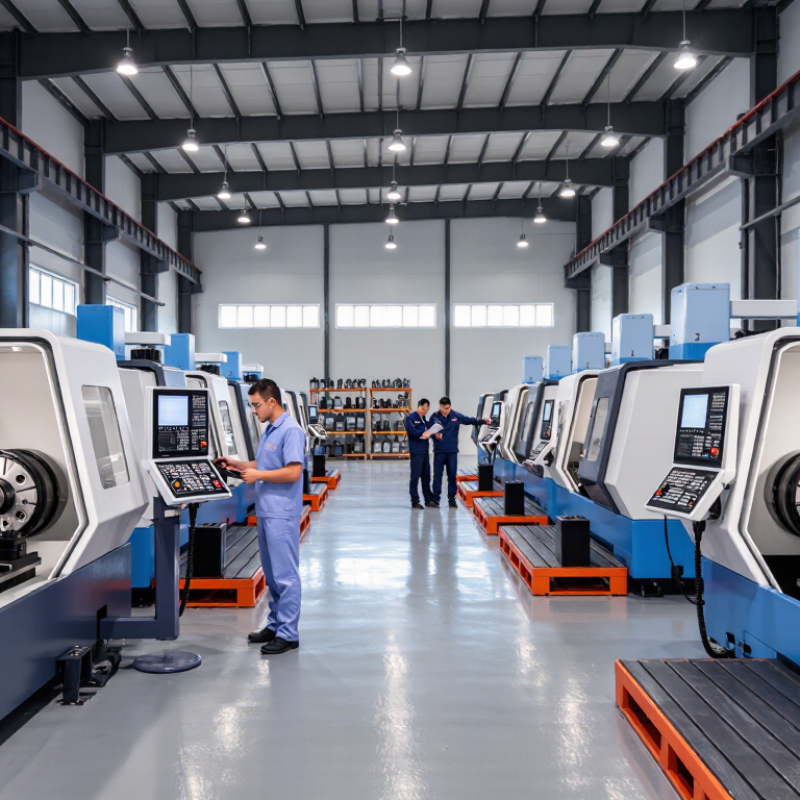
A reliable CNC lathe machine manufacturer in China must prove performance beyond a polished catalog. The 2023 ISO Survey recorded more than 1.26 million ISO 9001 certificates worldwide, but certification alone cannot guarantee stable machining. Buyers should inspect process records, calibration dates, and corrective-action reports. Ask for cutting tests using your material, drawing, tolerance, and cycle-time targets.
Measured evidence matters. ISO 230-2 provides methods for checking positioning accuracy and repeatability. A serious manufacturer should provide laser-interferometer results, spindle runout data, and thermal-compensation records. During a factory visit, watch the acceptance test closely. The machine should produce consistent parts, not one impressive sample.
Small details reveal experience: protected cable routing, clean coolant tanks, accessible lubrication points, and clear electrical labeling.
Market pressure is increasing. Grand View Research projects continued growth in the global CNC machine market through 2030, driven by automation and high-precision production. That growth also creates rushed suppliers. Reliability includes engineering support, spare-parts availability, software training, and response times after delivery. Request references from factories with similar workloads. Also question the warranty exclusions. One weakness remains easy to overlook: many buyers compare price before measuring total downtime. That decision may look efficient, but it deserves reconsideration.
Choosing a CNC lathe starts with the workpiece, not the catalog. A two-axis flat-bed lathe suits shafts, bushings, and repair parts with moderate production volume. Its open layout helps operators load heavy components and inspect cutting conditions quickly. These machines are practical for general machining workshops.
A slant-bed CNC turning center offers better chip evacuation and faster automated production. It handles hydraulic fittings, automotive parts, and precision sleeves efficiently. Live tooling adds milling, drilling, and tapping without repeated setups. That can reduce alignment errors. Yet, it also increases programming demands.
Swiss-type lathes support long, narrow parts such as medical instruments, small connectors, and miniature pins. The guide bushing holds material close to the cutting tool, improving stability. For complex components, a mill-turn machine can combine turning and multi-axis milling. It fits aerospace hardware, energy components, and custom industrial assemblies. However, one machine rarely performs every task perfectly.
Global buyers should compare spindle speed, bar capacity, axis travel, control compatibility, and service response. Test cuts reveal more than polished specifications. Ask for measured results using the intended material. Steel, aluminum, titanium, and hardened alloys require different tooling and coolant strategies. In practice, poor chip control can damage surface finish and waste hours. A reliable supplier should provide inspection records, installation guidance, operator training, and realistic tolerance data. Some buyers focus too heavily on price. That choice may become expensive when spare parts, downtime, and uncertain technical support enter the calculation.
For global buyers, a CNC lathe is more than a machine purchase. It is a long-term production decision. Reliable manufacturing begins with documented standards and repeatable procedures. A capable manufacturer should operate an ISO 9001 quality system with clear responsibilities. Machine accuracy should be verified through recognized methods, including ISO 230-2 positioning tests. Certificates alone prove little. Ask for the certificate scope, issue date, and testing organization.
Quality control should follow the part from raw bar stock to final shipment. Incoming materials need certificates, heat numbers, and visual checks. Operators should use calibrated micrometers, gauges, and surface roughness testers. Calibration records must be available and traceable. First-article inspection confirms dimensions before batch production starts. During machining, statistical process control can reveal tool wear early. Critical dimensions deserve recorded checks, not verbal approval.
Before shipment, a factory should perform a documented acceptance test. Inspectors can measure spindle runout, axis movement, thread accuracy, noise, and cutting performance. A sample test piece makes results easier to verify. Protective packaging also matters, especially for sea transport and humid storage. In practice, no process is flawless. I have seen excellent machines accompanied by incomplete inspection records. That weakness deserves attention. Ask how nonconforming parts are isolated, corrected, and rechecked. Response time matters. So does honest reporting when a tolerance is missed. A reliable supplier leaves evidence behind.
The chart shows the general linear tolerances for ISO 2768-1 tolerance class “m” (medium), commonly used when individual dimensional tolerances are not specified on engineering drawings. Smaller tolerance values indicate tighter dimensional control requirements during CNC turning, measurement, and final inspection.
Reference: ISO 2768-1:1989. These general tolerances do not replace product-specific drawings, material requirements, or machine performance verification such as ISO 230-2 testing.
Choosing a CNC lathe supplier requires more than comparing catalog prices. Fortune Business Insights valued the global CNC machine market at about USD 88.7 billion in 2023. Growth attracts capable factories, but also creates uneven quality.
Ask for measurable evidence. Request an ISO 230-2 positioning accuracy report, spindle runout data, and a documented factory acceptance test. The test should cut your actual material, such as 4140 steel or aluminum, using your target diameter and tolerance. Watch the finished surface under real shop conditions. A clean brochure is not enough.
Check the machine’s working envelope, maximum turning diameter, spindle speed range, chuck size, and turret indexing time. Confirm whether the control system supports remote diagnostics and data export. Ask how quickly replacement parts arrive at your location. Downtime can cost more than a small purchase-price difference. The International Federation of Robotics reported 541,302 industrial robot installations worldwide in 2023, showing how rapidly automation is expanding. Your lathe should fit that broader workflow, not operate as an isolated asset.
Supplier evaluation also needs financial and technical checks. Review quality records, operator training, installation procedures, and references from factories with similar production volumes. A supplier may provide excellent accuracy on day one, yet weak service later. That risk is easy to underestimate. Total cost should include tooling, energy use, software, maintenance, freight, and commissioning. Industry forecasts differ, and some market figures are optimistic. Treat them as direction, not proof. A live video inspection and an independently witnessed test are often more revealing.
| Evaluation Dimension | What Global Buyers Should Check | Typical Reference Data | Recommended Evidence | Priority |
|---|---|---|---|---|
| Machine Configuration | Confirm whether the machine is a 2-axis turning center, live-tooling lathe, Y-axis lathe, or mill-turn center. | 2-axis to multi-axis configurations | Detailed machine layout, axis diagram, tooling configuration, and signed technical specification. | High |
| Maximum Turning Diameter | Match the maximum swing and actual cutting diameter with the buyer’s largest workpiece, including tool clearance. | Approximately 250–800 mm, depending on machine class | Machine drawing, work-envelope diagram, and cutting test using a representative workpiece. | High |
| Maximum Turning Length | Evaluate usable turning length rather than only the advertised distance between centers. | Approximately 300–2,000 mm | Dimensioned work envelope and test-part drawing with tolerance requirements. | High |
| Spindle Bore and Bar Capacity | Check whether the spindle bore and chuck passage accommodate the required raw-bar diameter. | Spindle bore commonly 40–120 mm; larger options are available | Spindle specification, bar-feeder interface, chuck data, and sample-bar test. | High |
| Spindle Speed and Motor Power | Select speed and torque according to material, diameter, tooling, and roughing or finishing requirements. | Approximately 2,000–6,000 rpm; 7.5–37 kW is common for many production models | Motor rating method, torque curve, spindle speed range, and cutting demonstration. | High |
| Axis Travel and Rapid Traverse | Verify X- and Z-axis travel, rapid speed, acceleration, and interference limits. | X travel approximately 150–500 mm; Z travel approximately 300–2,000 mm | Axis travel chart, machine simulation, and cycle-time validation. | High |
| Positioning and Repeatability | Separate positioning accuracy from repeatability and confirm the measurement standard used. | Typical quality targets: positioning accuracy about ±0.005–0.010 mm; repeatability about ±0.002–0.005 mm | Factory acceptance test, calibrated laser or ball-bar report, and inspection records. | Critical |
| Turret Capacity | Assess the number of stations, indexing time, live-tool capability, and tool size compatibility. | 8–12 stations for many standard turning centers; 12–24 for more complex work | Turret drawing, tool-holder list, indexing-time specification, and sample program. | High |
| Control System and Connectivity | Check programming functions, language support, remote diagnostics, data backup, and shop-floor connectivity. | ISO G-code support; USB/Ethernet commonly available; optional network integration | Control manual, interface demonstration, compatibility test, and cybersecurity policy. | Medium |
| Automation Readiness | Determine compatibility with bar feeders, robotic loading, parts catchers, probing, and chip conveyors. | Interfaces vary by machine; verify I/O points and communication protocol | Interface list, electrical drawings, robot or feeder layout, and automation cycle test. | Medium–High |
| Thermal Stability | Evaluate warm-up behavior, spindle cooling, environmental conditions, and dimensional drift during extended production. | Validate through an extended run; no single universal value applies | 8-hour or equivalent endurance test, temperature records, and repeated-part inspection. | High |
| Machine Structure and Rigidity | Review bed design, guideways, casting quality, foundation requirements, and vibration behavior under heavy cuts. | Common designs include slant-bed or flat-bed structures with cast-iron bases | Structural drawings, machine weight, foundation plan, vibration test, and heavy-cut sample. | High |
| Safety and Compliance | Confirm guarding, emergency stops, electrical protection, risk assessment, and destination-market documentation. | Applicable requirements may include ISO 12100, IEC 60204-1, and local regulations | Declaration of conformity where applicable, electrical test report, risk assessment, and user manual. | Critical |
| Quality Management | Assess inspection procedures, traceability, calibration control, supplier management, and nonconformance handling. | ISO 9001 certification is a useful indicator but does not replace product testing | Valid certificate, process-control records, calibration certificates, and audit access. | High |
| Factory Acceptance Test | Use the buyer’s material, tooling, program, tolerances, surface-finish requirements, and cycle-time targets. | Acceptance criteria should be agreed before production | Signed FAT protocol, inspection report, video evidence, and retained test parts. | Critical |
| Installation and Training | Clarify installation scope, leveling, commissioning, operator training, and travel responsibilities. | On-site or remote support should be contractually defined | Installation schedule, training agenda, service personnel qualifications, and commissioning checklist. | Medium–High |
| Warranty and Spare Parts | Compare warranty duration, exclusions, response time, critical spare-parts availability, and after-sales escalation. | Common warranty periods are 12 months, subject to contract terms | Warranty document, spare-parts list, service-level agreement, and support contact process. | High |
| Total Cost of Ownership | Include purchase price, freight, duties, installation, tooling, energy, maintenance, downtime, and consumables. | Evaluate over a planned service life, commonly 7–10 years for budgeting | Five-year or ten-year cost model with assumptions and sensitivity analysis. | High |
Note: The numerical ranges are general reference values for preliminary supplier comparison. Final acceptance should be based on the selected machine configuration, applicable standards, documented test conditions, and the buyer’s actual workpiece requirements.
China Best CNC Lathe Machine Manufacturer for Global Buyers?
For global buyers, a reliable CNC lathe manufacturer must support more than machine production. Export experience matters at every stage. Crating should protect the spindle, control cabinet, and tooling during long sea transport. Moisture barriers and shock indicators provide useful evidence after arrival. Commercial invoices, packing lists, certificates, and installation instructions should match the actual shipment. Small document errors can delay customs clearance. That is not glamorous.
Technical support should continue after delivery. A professional supplier can provide remote setup guidance, parameter checks, and operator training through clear video calls. Detailed electrical drawings help local technicians trace faults safely. Spare parts should be identified by drawings or photographs, not vague descriptions. Response time also matters when production is waiting. A practical support team asks for alarm codes, machine photos, and operating conditions before suggesting repairs.
Long-term cooperation depends on honest communication. A supplier should explain achievable accuracy, recommended materials, and maintenance intervals without exaggerated promises. Trial machining and factory acceptance testing can reveal vibration, chip evacuation, or programming issues early. No supplier gets every detail right, and buyers should inspect carefully rather than trust attractive specifications. We have seen projects improve when both sides record problems openly and revise procedures. Regular service reviews, training updates, and planned spare-parts supply create steadier cooperation than one-time price negotiations. Safety compliance and local electrical requirements must remain part of the discussion.