Choosing the right metal-cutting machine often begins with clear specifications and a realistic price. The Band Saw Bs712n is widely considered a practical workshop model for cutting steel, aluminum, pipes, and other common materials. Its horizontal design, compact footprint, and adjustable cutting performance may suit repair shops, fabrication rooms, and serious home workshops. However, product details can differ between Chinese manufacturers and export suppliers.
A reliable evaluation should examine cutting capacity, blade dimensions, motor power, speed settings, vise construction, frame strength, and electrical requirements. These details affect daily performance more than a low quotation alone. Ask the supplier for a current datasheet, test video, packing photographs, and a complete list of included accessories. A machine may look identical online, yet use different motors, switches, or blade guides. That matters.
Price also depends on order quantity, voltage, shipping terms, customization, and after-sales support. Comparing several China-based suppliers helps reveal the normal market range. Still, the cheapest offer is not always the best value. My practical concern is simple: replacement blades and technical support are often ignored until production stops. Check those points before purchasing.
This guide explores the Band Saw Bs712n price and specifications from a buyer’s perspective. It considers measurable features, workshop usability, supplier credibility, and ownership costs. Some advertised figures may require confirmation. That is worth remembering. A careful buyer should verify every important detail before placing an order.
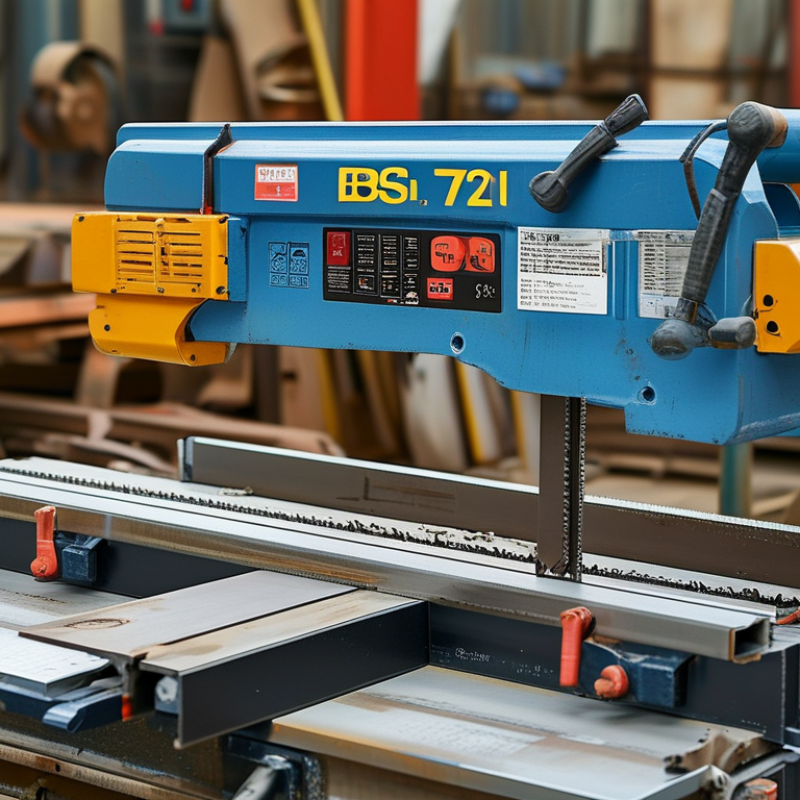
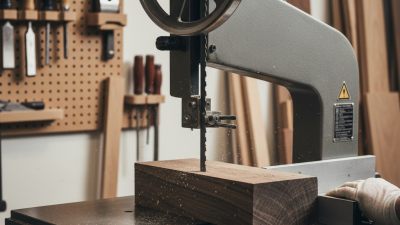
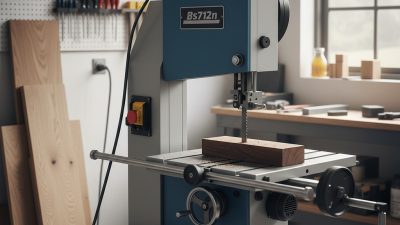
The BS712N is a compact horizontal band saw designed for practical metal cutting. Its enclosed steel frame helps control vibration during routine workshop work. A pivoting vise can hold square, round, and rectangular stock securely. Depending on configuration, the saw may offer adjustable blade speeds and a geared drive system. These features support cleaner cuts through steel tubing, angle iron, shafts, and light structural sections.
In daily use, accurate setup matters more than advertised capacity. The operator should check blade tension, tracking, and vise alignment before cutting. Moderate feed pressure usually produces a straighter cut and extends blade life. Cutting fluid can reduce heat when working with thicker steel. The machine suits maintenance shops, fabrication benches, agricultural repairs, and small production tasks. It is useful where a portable abrasive cutter feels too rough.
The cutting process is not always fast. Thick stock can test the motor and patience. That is normal. Before buying, compare the stated cutting capacity, motor power, blade size, speed range, and table height. Ask for clear technical documents and replacement-part support. Prices vary with accessories, shipping, and local service. One weakness is its limited suitability for continuous industrial production. I would verify actual test cuts before trusting a specification sheet completely.
The BS712N is a compact horizontal band saw for workshops, maintenance rooms, and light fabrication. Common specifications include a 1.1 kW motor and a blade measuring about 20 x 0.9 x 2,362 mm. Its four selectable blade speeds are typically 27, 41, 61, and 82 meters per minute.
At 90 degrees, the saw usually handles round stock up to 178 mm and rectangular material up to 305 x 178 mm. At 45 degrees, capacity commonly drops to about 127 mm for round sections. These figures describe standard configurations, not every machine sold. Check the supplier’s technical sheet before ordering.
In practical cutting, the BS712N works best with steady downward pressure. For mild steel, a slower blade speed and suitable cutting fluid help reduce heat and tooth wear. Aluminum needs a faster setting and careful chip removal. I have found that the built-in vise can require adjustment before producing consistently square cuts. Small alignment errors matter.
The frame feels adequate for routine work, although thin-wall tubing may vibrate without proper support. Blade tension, wheel tracking, and guide bearing clearance should be checked before production use. Replacement blades are widely available, but quality differs noticeably. Price depends on motor voltage, shipping, included stand, and blade quality, so a low quotation may exclude useful accessories.
The BS712N is a compact horizontal metal-cutting bandsaw for workshops and light fabrication. Chinese export quotations often place this class between USD 700 and USD 1,300, before freight and local taxes. Actual pricing changes with motor voltage, blade quality, packaging, and certification.
Typical specifications include a 0.75 hp motor, a 64.5-inch blade, and cutting speeds near 20, 29, and 50 metres per minute. At 90 degrees, capacity is commonly about 100 mm round or 100 × 150 mm rectangular steel.
Its cast-iron frame helps reduce vibration, while the steel vise holds mild steel, stainless steel, and aluminium sections. A bimetal blade is more practical than a basic carbon-steel blade for repeated work. The adjustable hydraulic downfeed controls pressure as the blade enters the material. Operators can also set the cutting angle, clamp length, and automatic shut-off position.
Keep the blade tension moderate. Excess tension damages bearings.
The International Energy Agency reports that motor-driven systems consume roughly 70% of industrial electricity, making motor efficiency and idle-time control relevant, even for small machines. OSHA guidance also stresses guarding, stable workholding, and safe blade access.
In practice, the BS712N can produce clean cuts, but alignment may need adjustment after transport. I would not trust a low price alone. Ask for measured cutting capacity, blade specifications, noise data, spare-part availability, and a test-cut video before ordering.
The BS712N price depends on more than the machine’s basic quotation. Frame material, motor power, blade size, cutting capacity, and included accessories can shift the offer considerably. A 2024 market report from Grand View Research places the global metal cutting machine market on a mid-single-digit growth path through 2030. That trend supports steady demand, but it does not guarantee lower prices.
Supplier comparison should begin with the delivered cost. Request the machine price, export packaging, freight, spare blades, warranty coverage, and commissioning support separately. A factory-direct offer may look 8–15% cheaper than a trading supplier’s quote. However, the lower offer may exclude electrical adjustments or replacement parts. Check the motor rating carefully. Some listings show input power, while others show output power. The figures are not equal.
Ask for a current test video. It should show a real cut through steel stock, not an empty running blade. Review cutting tolerance, vise alignment, noise, and hydraulic performance. ISO 9001-based quality systems can improve process consistency, but certification alone proves little about this model. In my sourcing experience, a neat quotation often hides unclear delivery terms. I would also compare at least three suppliers and request identical specifications. Small omissions matter. A cheaper machine can become expensive after one missed shipment or an unavailable blade.
Choosing the right BS712N starts with your stock, not its advertised price. Typical versions cut round steel near 4.5 inches, but capacity changes with material shape and blade pitch. Check the actual throat depth, vise opening, and maximum rectangular cut. A 1 HP motor may suit mild steel, while frequent stainless-steel work demands slower cutting and better cooling. Confirm the available voltage before ordering.
Safety deserves equal attention. The U.S. Bureau of Labor Statistics recorded about 2.6 million nonfatal private-industry injuries in 2023. That figure is not bandsaw-specific, but it reinforces the need for guarded moving parts and stable workholding. OSHA guidance also emphasizes machine guarding and operator protection. Choose a BS712N with a rigid vise, clear blade guards, emergency stopping access, and a dependable automatic shutoff. Small details matter.
Ask suppliers for measured noise, blade-speed range, net weight, and spare-blade costs. Compare delivered prices, not catalogue prices. A heavier frame usually reduces vibration, although weight alone proves little. Test a sample cut if possible. Watch for wandering, overheating, or burrs on the underside. I would question any specification lacking cutting conditions. One practical mistake is buying the cheapest model, then discovering its standard blade cannot handle your daily material. The correct choice should match your stock, power supply, floor space, and maintenance habits.
| Category | Specification or Evaluation Point | Typical BS712N Data | Workshop Selection Guidance |
|---|---|---|---|
| Core Machine Specifications | |||
| Machine Type | Cutting configuration | Horizontal metal-cutting band saw with a pivoting saw head | Suitable for cutting steel, stainless steel, aluminum, copper, and other non-ferrous metals when the correct blade is fitted. |
| Maximum Cutting Capacity at 90° | Round material | Approximately 7 in (178 mm) | Choose this capacity based on the largest round bar or tube that must be cut regularly, not occasionally. |
| Maximum Cutting Capacity at 90° | Rectangular material | Approximately 7 × 12 in (178 × 305 mm) | Confirm the actual workpiece size after allowing clearance for the vise, blade guide, and material clamping. |
| Maximum Cutting Capacity at 45° | Typical round capacity | Approximately 4 in (102 mm) | Mitre-cut capacity is lower than straight-cut capacity; check the machine drawing before purchasing for frequent angle work. |
| Blade Size | Blade length and width | Approximately 93 in × 3/4 in (2,362 mm × 19 mm) | Use the exact blade dimensions specified for the particular machine revision. Incorrect length or width can damage the guides and wheels. |
| Blade Thickness | Standard blade thickness | Approximately 0.032 in (0.8 mm) | Match blade thickness to the wheel profile and the manufacturer’s recommended range. |
| Blade Speeds | Selectable cutting speeds | Commonly about 80, 120, 200, and 280 ft/min (24, 37, 61, and 85 m/min) | Use slower speeds for stainless steel and harder alloys; use higher speeds for aluminum and other soft metals. |
| Motor | Motor rating | Typically 1 hp (approximately 0.75 kW) | A 1 hp motor is generally adequate for light- to medium-duty workshop cutting. Confirm voltage, phase, and frequency before ordering. |
| Electrical Supply | Available configurations | Commonly supplied in single-phase versions such as 110 V or 220–240 V | Choose the configuration that matches the workshop circuit. Ask for the rated current and plug or wiring requirements. |
| Vise Range | Clamping function | Adjustable vise for straight and angled cuts | A rigid vise with a quick-adjust feature improves repeatability and reduces vibration during batch cutting. |
| Price and Ownership Factors | |||
| Typical Machine Price | Estimated new-machine range | Approximately US$650–US$1,200 before shipping, taxes, tooling, and local delivery | Prices vary according to motor voltage, included stand, packaging, quantity, certification, and supplier quality. Treat this as a market reference rather than a fixed quotation. |
| Imported Total Cost | Landed cost considerations | Machine price plus freight, import duty, VAT or sales tax, customs clearance, and local delivery | Request a delivered or landed quotation when comparing overseas offers; a lower machine price may have a higher final cost. |
| Included Accessories | Typical package contents | Machine stand, workstop, blade, vise, blade guards, and basic assembly hardware may be included | Confirm every included item in writing. A coolant system, spare blades, rollers, and replacement guide bearings may be optional. |
| Consumable Cost | Replacement blades | Varies by material, tooth pitch, blade construction, and quantity purchased | Budget for several tooth pitches, such as variable-pitch blades for mixed sizes and finer-pitch blades for thin-wall tubing. |
| Warranty and Parts | After-sales support | Check warranty length, spare-part availability, blade-guide support, and response time before purchase | Reliable access to bearings, belts, switches, guide assemblies, and electrical components can be more important than a small initial price difference. |
| How to Choose the Right BS712N | |||
| Material Range | Materials and hardness | Best suited to common workshop metals within the machine’s capacity | For hardened alloy steel, large solid stock, or continuous production, compare a heavier-duty saw with greater rigidity and automatic feed control. |
| Required Cutting Size | Largest regular workpiece | Keep the normal workpiece below the stated maximum capacity | Allow at least 10–20% practical clearance when possible to improve clamping access and cutting stability. |
| Cutting Volume | Frequency of use | Appropriate for maintenance work, fabrication, repair shops, and moderate batch cutting | For high-volume production, consider automatic material feeding, hydraulic downfeed, programmable length stops, and a larger industrial machine. |
| Blade Selection | Tooth pitch | Variable-pitch blades are commonly suitable for mixed-section stock | Keep at least 3 teeth engaged in thin material and avoid using a tooth pitch that is too fine for thick solid stock. |
| Accuracy | Cut squareness and repeatability | Depends on blade tension, guide alignment, vise pressure, feed rate, and machine setup | Inspect the blade guides, wheel alignment, vise surface, and head pivot before judging the machine’s cutting accuracy. |
| Workshop Space | Installation requirements | Allow room for the machine, material support, operator access, and long stock | Place the saw on a stable, level surface and provide enough clearance to load long bars safely. |
| Safety Features | Operator protection | Blade guards, emergency stop function, enclosed drive components, and a secure vise are essential | Do not operate the saw with missing guards. Verify local electrical and machine-safety requirements before commissioning. |
| Final Buying Check | Documents to request | Technical drawing, electrical diagram, packing list, warranty terms, spare-parts list, and test-cut information | Compare identical specifications, delivered cost, support availability, and documentation rather than comparing price alone. |